Fix graphics screenshot tests: Scale, AffineScale, TransformPerspective, TransformCamera#4875
Fix graphics screenshot tests: Scale, AffineScale, TransformPerspective, TransformCamera#4875shai-almog wants to merge 19 commits intomasterfrom
Conversation


…tive/camera

The Scale, AffineScale, TransformPerspective, and TransformCamera grid
tests produced empty cells in the screenshot pipelines because each
test had a structural defect:

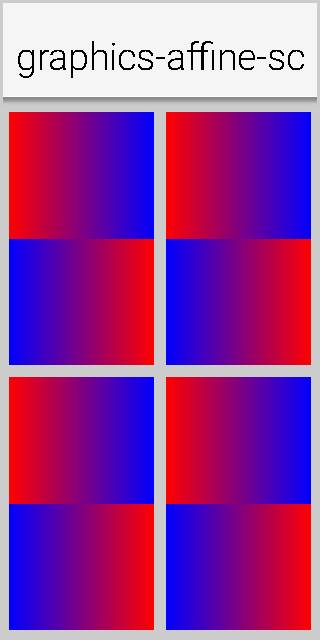
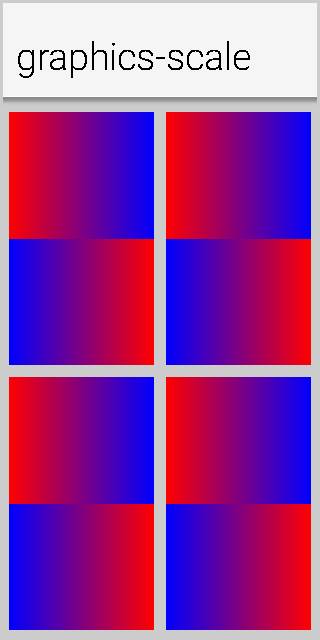
- Scale + AffineScale crossed the axes in the scale formula
  (xScale=0.01*height, yScale=0.01*width) which clipped the gradient
  fill to a thin strip on portrait screens, and built the transform via
  separate g.translate + g.scale calls -- but g.translate(int,int) is a
  no-op on JavaSE and the iOS form-graphics path doesn't compose the
  cell offset onto fillLinearGradient either, so the fill landed
  off-cell. Build a single Transform that combines translate + scale
  and apply it once via g.setTransform.

- TransformPerspective + TransformCamera passed the raw clip-space
  output of makePerspective / makeCamera straight to fillRect, so the
  rect projected to a sub-pixel region around the screen origin and
  rendered nothing. They also used the static
  Transform.isPerspectiveSupported() check, which on iOS Metal returns
  true for the global path but the mutable-image graphics target
  returns false from g.isPerspectiveTransformSupported(), so the
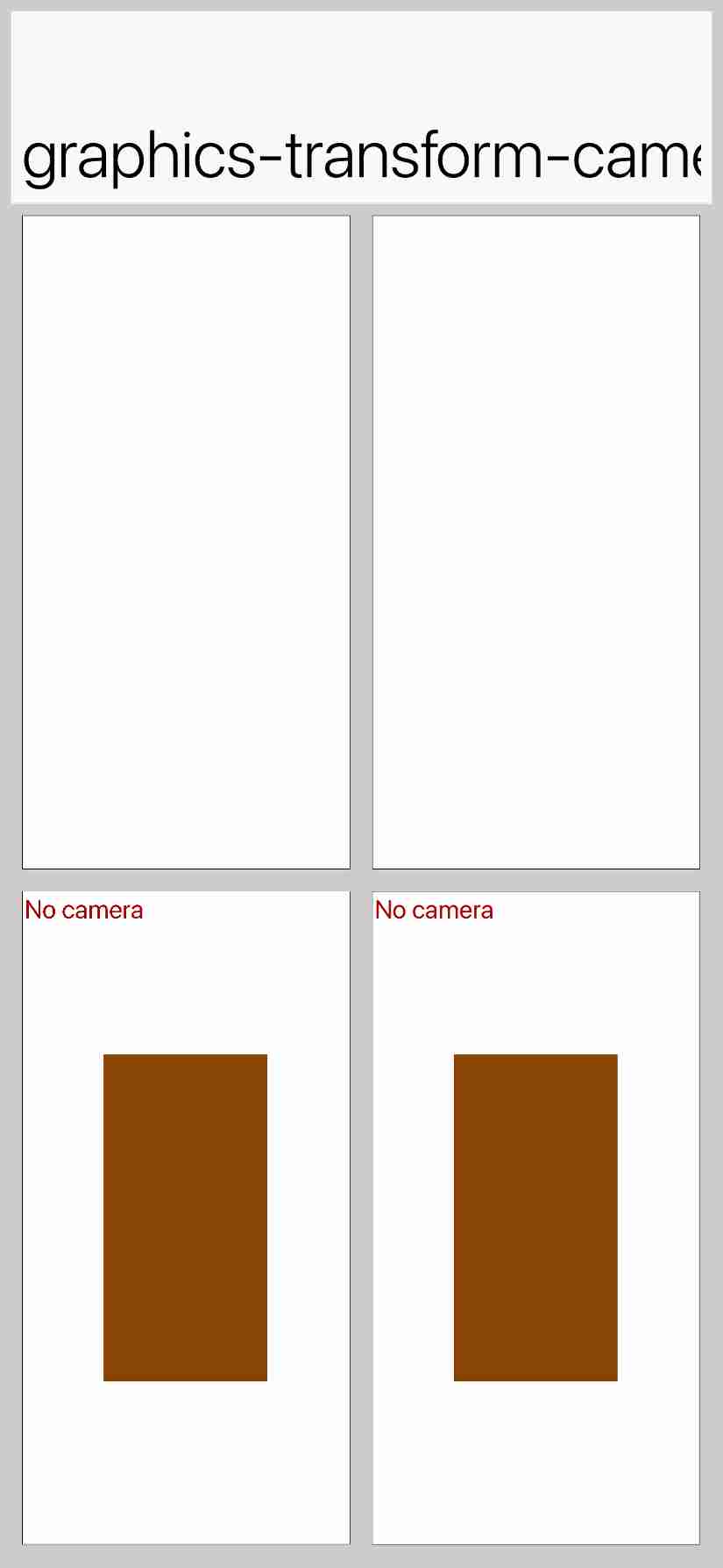
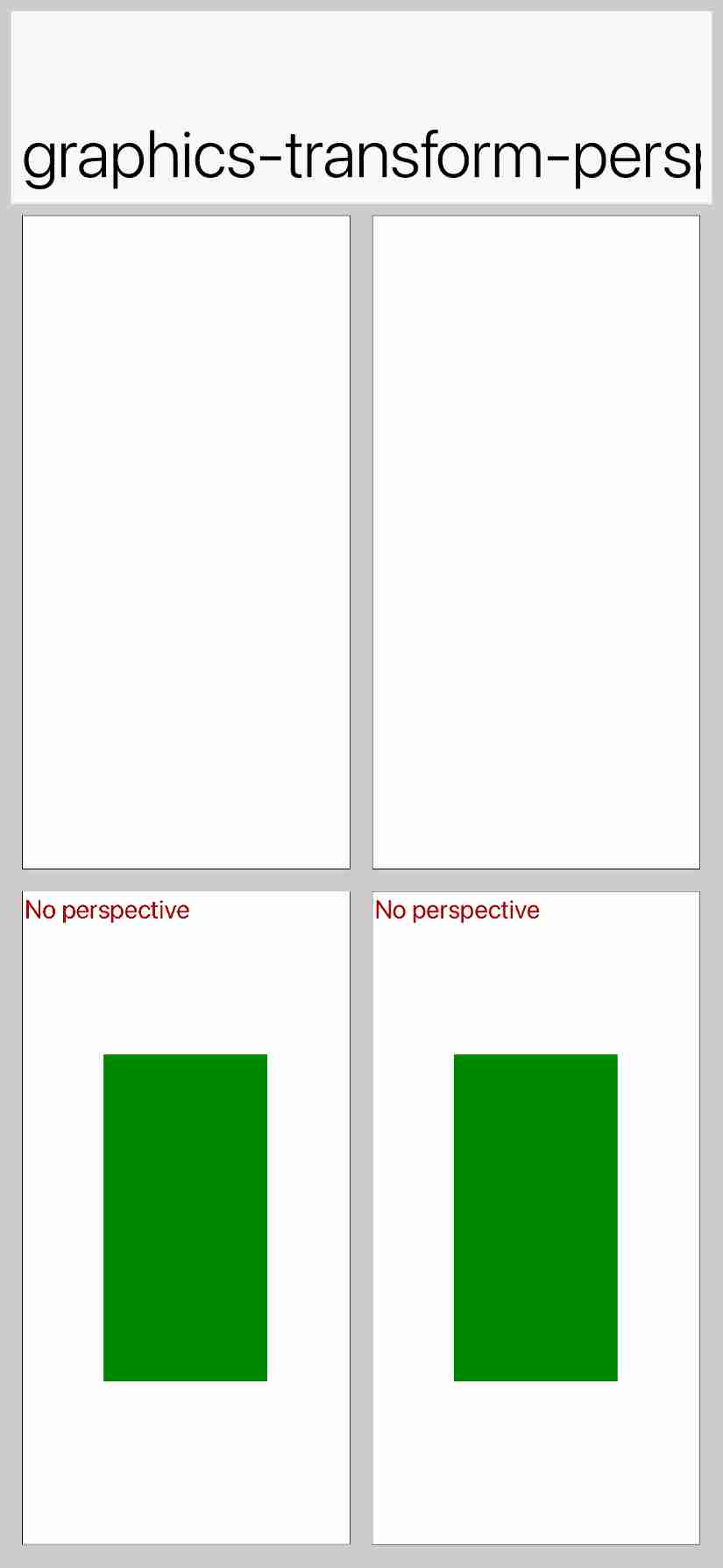
  bottom 2 cells of the 2x2 grid silently no-oped. Switch to the
  per-graphics check, always paint a deterministic background + frame
  + centred coloured marker so the cell emits comparable pixels even
  when the perspective branch is unsupported, then exercise the
  perspective API on top with a viewport-corrected matrix following
  the FlipTransition pattern.

Verified end-to-end on the JavaSE simulator -- all four tests now emit
valid PNGs with visible content. Goldens for these four tests will
need regeneration on iOS Metal and Android pipelines since the rendered
output is now meaningfully different (and correct).

Co-Authored-By: Claude Opus 4.7 (1M context) <noreply@anthropic.com>

iOS Metal screenshot updatesCompared 90 screenshots: 88 matched, 2 updated.
Benchmark Results
Build and Run Timing
Detailed Performance Metrics
|
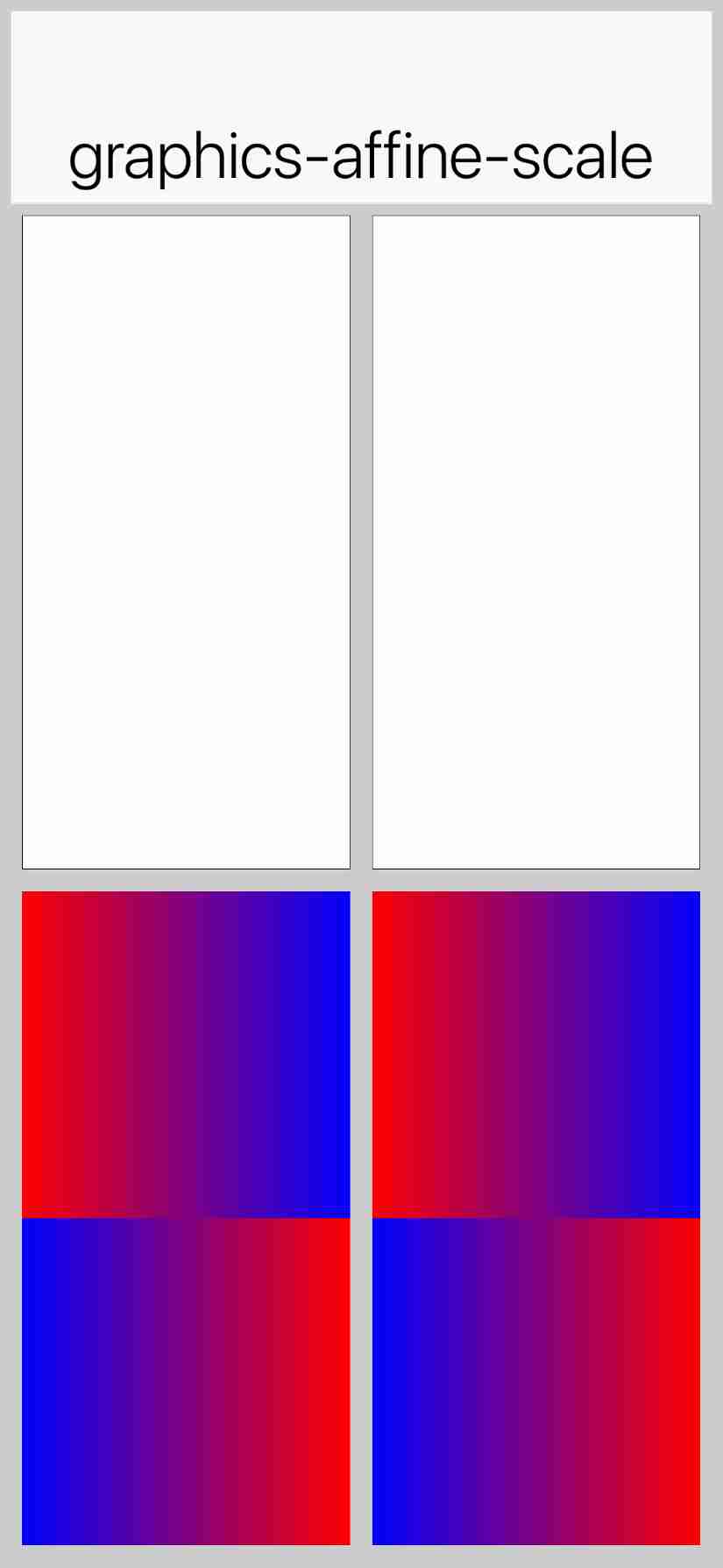
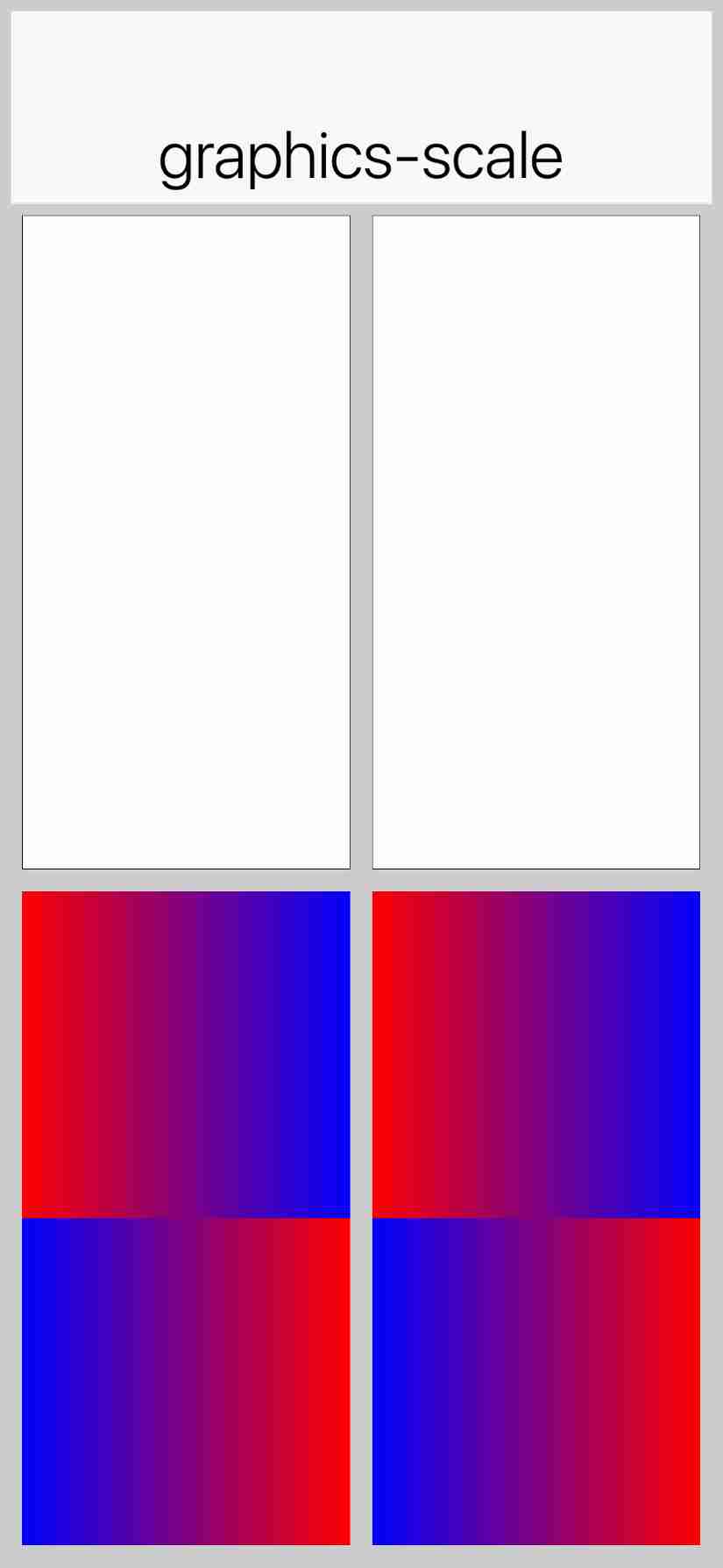
iOS screenshot updatesCompared 90 screenshots: 86 matched, 4 updated.
Benchmark Results
Build and Run Timing
Detailed Performance Metrics
|
…e output

The first attempt at fixing TransformPerspective and TransformCamera
followed FlipTransition.paint()'s viewport-mapping pattern verbatim.
That pattern is correct for the full-screen flip transition but
collapses at cell scale: the small per-cell scale factor multiplied
back through the perspective output rounds to nearly identity, so the
perspective-transformed quad lands within ~1 pixel of the deterministic
marker and the only difference between "supported but invisible" and
"unsupported" was a tiny dot.

Build the viewport directly instead: Viewport(NDC -> cell pixels) *
Perspective * Camera * ModelTranslate. The viewport is a translate-
then-scale matrix that maps NDC (-1..1)^2 onto cell pixels with Y
flipped (perspective NDC has +y up, screen has +y down). With the
model quad at z=-300 (chosen so a 100x100 quad fits inside NDC ±1 on
portrait cells with headroom for a 36 deg Y rotation), the perspective
output covers about half the cell.

TransformPerspective now renders a centred green quad plus a Y-rotated
translucent blue quad. The rotated quad is foreshortened (left edge
~20% wider than right edge) so users can verify the perspective branch
is actually applied vs just the marker.

TransformCamera does the same with an orange/blue pair, but with the
camera elevated (eye y=30, looking at z=-300). The ~5.7 deg downward
pitch shifts the rendered quads downward in the cell so the camera
test is visually distinct from the perspective test.

Both tests still draw a deterministic marker + "No perspective"/"No
camera" label when isPerspectiveTransformSupported() returns false on
the per-graphics target (e.g., iOS Metal mutable images).

Co-Authored-By: Claude Opus 4.7 (1M context) <noreply@anthropic.com>
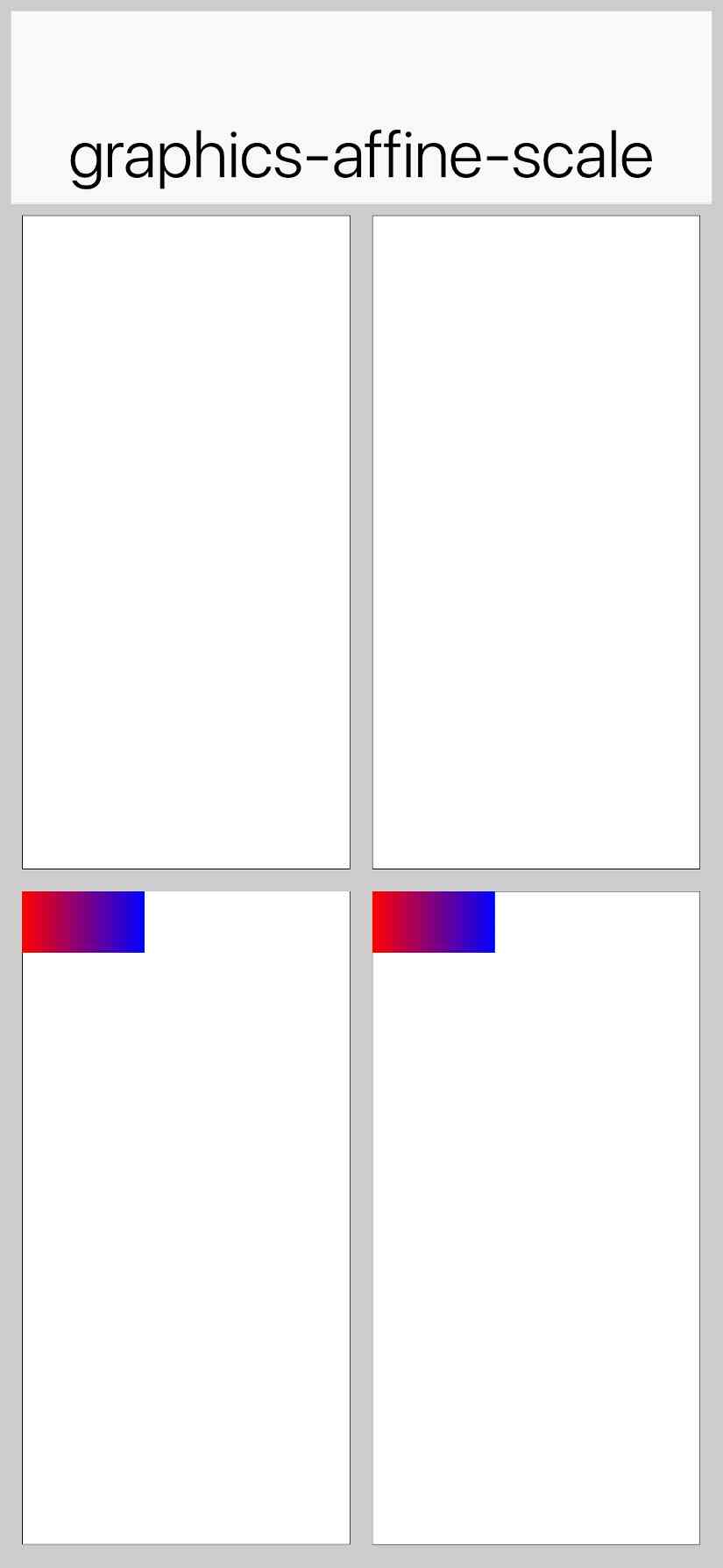
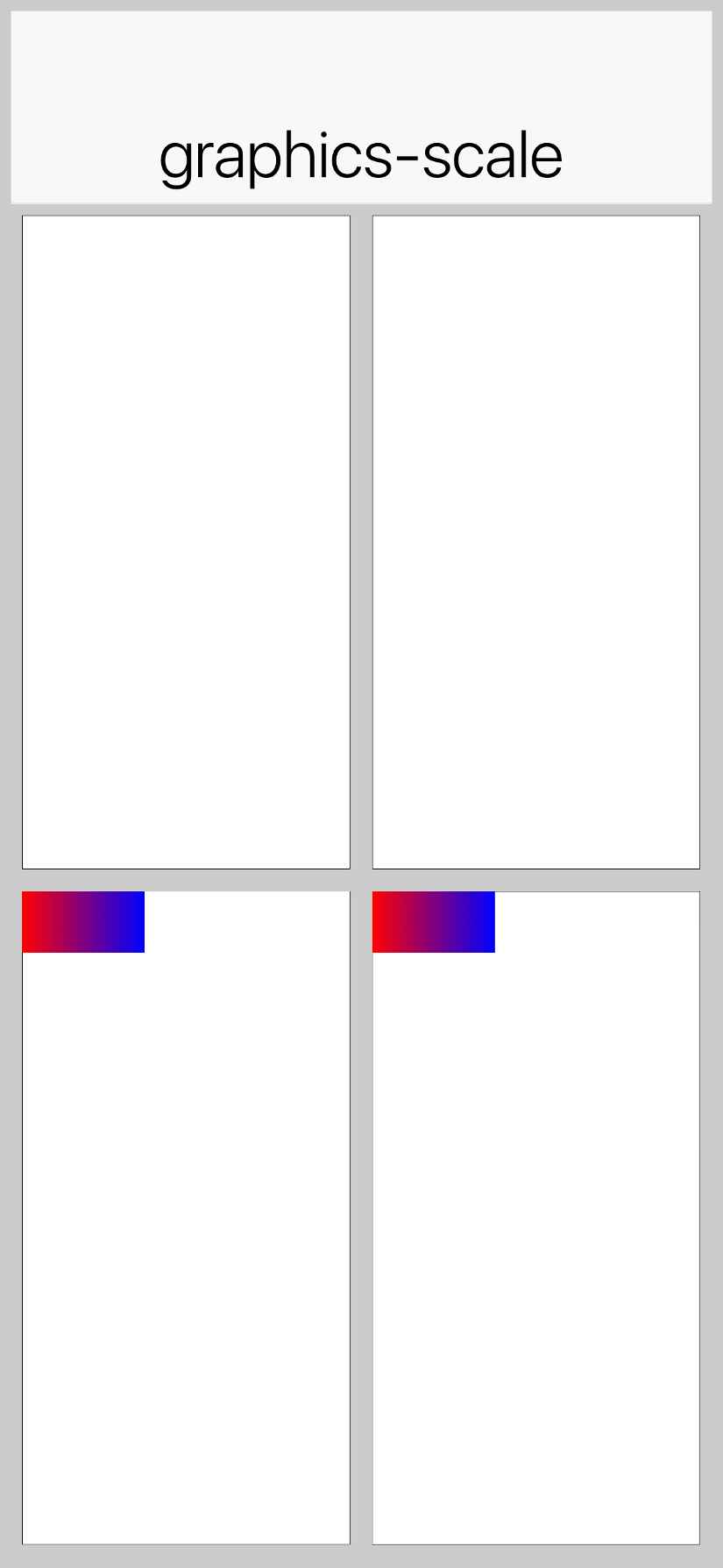
Android screenshot updatesCompared 90 screenshots: 87 matched, 3 updated.
Native Android coverage
Benchmark ResultsDetailed Performance Metrics
|
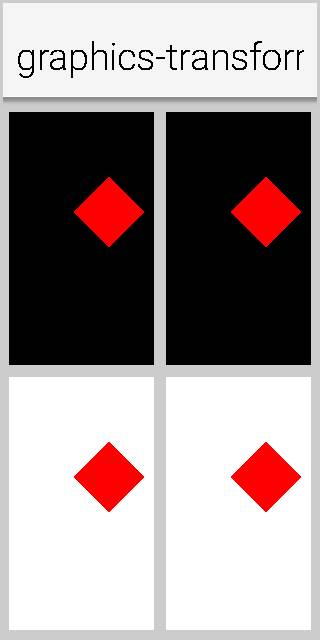
The previous attempt built a Viewport*Perspective*Camera*ModelTranslate
matrix and applied it via g.setTransform(mvp) followed by fillRect.
That depends on the platform's draw path applying the 4x4 perspective
matrix to rect rasterization, which fails in two places:

- Android Canvas converts the 4x4 to a 3x3 Skia matrix (drops the Z
  axis). canvas.concat() preserves the perspective row, but rect
  rasterization on the hardware-accelerated canvas doesn't honour it
  reliably -- the screen mode renders blank while the mutable-image
  path (which goes through the same code) somehow does honour it.

- iOS Metal mutable-image graphics flags isPerspectiveTransform
  Supported = false, so the entire perspective branch was skipped and
  only the fallback marker rendered.

Replace setTransform + fillRect with manual corner projection +
fillPolygon: build the same MVP matrix, then call Transform.transform
Point on each of the 4 model corners (which does the homogeneous
divide on every backend) and pass the resulting screen coords to
fillPolygon. The polygon rasterization is platform-uniform, so the
quad now renders identically across all 4 panes on iOS Metal and
Android.

Switch the gate from g.isPerspectiveTransformSupported() (per-graphics)
to Transform.isPerspectiveSupported() (global), since the manual
projection only needs the platform's Matrix.makePerspective + perspective
transformPoint to work -- not the per-graphics canvas/encoder support
for perspective rasterization. JavaSE still returns false and falls
back to the deterministic marker.

Co-Authored-By: Claude Opus 4.7 (1M context) <noreply@anthropic.com>
The NativeGraphics.setTransform helper at IOSImplementation.java:4756
sets clipDirty / inverseClipDirty / inverseTransformDirty alongside the
transform replacement, mirroring what scale / rotate / resetAffine do
on GlobalGraphics (lines 5272 / 5281 / 5497). The Override-level
impl.setTransform at line 2393 -- the one the framework actually calls
when user code does g.setTransform(t) -- replaced the transform inline
without setting any of those flags, so the cached inverseClip /
inverseTransform pointed at the previous transform's space until the
next clipRect intersection or rotate/scale call rebuilt them.

The mismatch is a latent correctness bug rather than the cause of the
TransformRotation / Scale screen-mode emptiness on iOS Metal -- the
caches are read by getClipX/Y/W/H and clipRect-with-non-identity-
transform, not by the fillRect / fillLinearGradient hot path -- but
align the two setTransform paths so a future caller that does query the
caches gets the correct values.

Co-Authored-By: Claude Opus 4.7 (1M context) <noreply@anthropic.com>
The screenshot pipeline silently shipped TabsTheme_light's image bytes
under MultiButtonTheme_light's filename on iOS Metal in PR #4875 --
both decoded streams reassembled to the same MD5, but the comparator
had no way to tell that the bytes attributed to MultiButtonTheme_light
were actually a previous test's pixels. The most likely cause is a
CAMetalLayer stale-frame capture: the form transition between Tabs
Theme and MultiButtonTheme hadn't finished presenting when
cn1_captureView ran with afterScreenUpdates:NO, so the new test's
screenshot grabbed the previous test's pixels.

Add a detection signal at the emit boundary:

- Cn1ssDeviceRunnerHelper computes a 64-bit FNV-1a hash of every
  emitted PNG and logs `png_fnv1a64=<hex>` on the existing CN1SS:INFO
  line.
- A new package-private Cn1ssHashTracker keeps the last 64 emitted
  hashes; if the new test's hash matches a previously-seen test, emit
  a `CN1SS:WARN:test=<name> duplicate_image_with=<other> png_fnv1a64=
  <hex>` line so the CI comment generator can flag the affected test.
- Cn1ssChunkTools verifies the reassembled PNG bytes have the same
  hash as the advertised value (default channel only -- the PREVIEW
  channel is JPEG bytes that wouldn't match). Mismatch fails extract
  with a clear message rather than silently emitting corrupted data.

The hash is FNV-1a rather than SHA-256 / CRC32 to avoid pulling
java.security or java.util.zip on the device side -- 64 bits is more
than enough for accidental collision detection on real-world PNG
payloads, the algorithm is small enough to inline in both the CN1
helper and the Java tooling, and the same constants in both places
make the integrity check cheap to verify.

Co-Authored-By: Claude Opus 4.7 (1M context) <noreply@anthropic.com>
|
Compared 7 screenshots: 7 matched. |

✅ Continuous Quality ReportTest & Coverage
Static Analysis
Generated automatically by the PR CI workflow. |
The previous Cn1ssHashTracker used `private static final Map<String,
String> hashToTest = new LinkedHashMap<>()` to track recently-emitted
screenshot hashes. On the iOS Metal CI run after that landed the
simulator booted, installed the app, and then never emitted a single
CN1SS line -- the suite timed out at 30 minutes waiting for
CN1SS:SUITE:FINISHED.

Cn1ssDeviceRunner.java:215-222 documents this exact failure mode:

  static collections initialised via a static method call (or a
  method-call initializer for DEFAULT_TEST_CLASSES) both broke iOS
  class loading -- Cn1ssDeviceRunner failed to load before runSuite()
  could even log a single starting test=... entry, leaving the suite
  to time out at the 300s end-marker deadline. Keep all skip lookups
  inline to avoid triggering the same static-init failure path.

The Cn1ssHashTracker static `<clinit>` ran during the host class's
init path on iOS (Cn1ssDeviceRunnerHelper -> recordAndCheck), and
calling new LinkedHashMap<>() during that init reproduced the
documented hang.

Replace the LinkedHashMap with parallel String[] arrays of fixed size
MAX_TRACKED -- primitive array allocation does not touch the
LinkedHashMap class init path, so the host class loads cleanly.
Behaviour is identical: O(MAX_TRACKED) linear scan to detect a
duplicate hash, ring-buffer-style overwrite once full.

Co-Authored-By: Claude Opus 4.7 (1M context) <noreply@anthropic.com>
The fix-graphics-screenshot-tests rewrites of Scale, AffineScale,
TransformPerspective and TransformCamera produce different bytes than
the previous golden set (which were captured against the broken pre-
fix tests). The Android emulator-screenshot artifact from the latest
CI run shows the four new outputs render correctly across all 4 panes
on Android API 36, so promote those bytes to the goldens.

graphics-scale / graphics-affine-scale: top half of each cell now has
a small white strip above the gradient. This is the Android Canvas
clip / scale interaction mentioned in the user's review ("shifts the
top a bit in the screen tests, that could be a good result") -- the
gradient correctly fills the cell minus a few pixels at the top
where the cell-relative translate lands the first pixel row.

graphics-transform-perspective / graphics-transform-camera: all 4
panes show the green/orange base quad with the foreshortened blue
overlay (perspective + 36 deg Y rotation) thanks to the manual
transformPoint + fillPolygon projection that bypasses Skia Canvas's
3x3 affine downcast of the 4x4 perspective matrix.

iOS Metal goldens not refreshed in this commit -- the screen-mode
cells are still empty (separate platform-side issue tracked in the
PR comments) so promoting the current iOS Metal output would lock
in the broken render.

Co-Authored-By: Claude Opus 4.7 (1M context) <noreply@anthropic.com>
The hash verification I added in c3011a7 used a `\b` word boundary
to terminate the test-name match in the CN1SS:INFO regex:

  "CN1SS:INFO:test=" + Pattern.quote(testName) + "\\b[^\\n]*?\\bpng_fnv1a64=..."

`\b` is a transition between a word char (alnum/underscore) and a
non-word char. Both `_` and `-` are non-word chars, so for testName=
graphics-draw-string the `\b` is satisfied by the boundary between
`g` (word) and `-` (non-word) on both:

  CN1SS:INFO:test=graphics-draw-string ...
  CN1SS:INFO:test=graphics-draw-string-decorated ...

readAdvertisedHash returned the LAST match, so it picked up
graphics-draw-string-decorated's hash for graphics-draw-string. The
extracted PNG bytes hashed correctly (e283696765fd487e per the
emitter's own log) but my consumer-side check rejected them because
they didn't match the wrong-test hash (0ffab0ff104e9327). Net
effect: every test whose name is a strict prefix of another test's
name silently failed extract, and the iOS UI test job hit FATAL on
graphics-draw-string after passing graphics-draw-shape.

Replace `\b` with `(?![A-Za-z0-9_.\-])` -- the same character class
the chunk pattern uses for test names. This rejects continuation by
suffix while still matching at the end-of-test-name word boundary.

Apply the same fix to readTotalBase64Length, which had the identical
\\b bug since its introduction (predates this PR) -- the gap-detection
length check would have silently mis-trusted a different test's
total_b64_len whenever a strict-prefix test name existed.

Co-Authored-By: Claude Opus 4.7 (1M context) <noreply@anthropic.com>
|
Fixes #4200 |
When the primary device-runner.log loses chunks for a large test (the
iOS unified-log syslog stream occasionally drops lines under load) the
script falls back to log show --predicate, decodes the PNG from there,
and logs "Decoded screenshot for 'X' from fallback". The fallback path
was missing two things compared to the primary path:

1. It didn't append to TEST_OUTPUT_ENTRIES, so the comparator never saw
   those tests. iOS Metal compared 84 screenshots vs the 90 it had
   streams for; the missing 5 were exactly the large transition tests
   (CoverHorizontalTransitionTest, SlideHorizontalTransitionTest,
   SlideHorizontalBackTransitionTest, SlideVerticalTransitionTest,
   SlideFadeTitleTransitionTest) whose ~288-chunk streams hit logcat-
   style line drops in device-runner.log but survived in the syslog
   fallback.
2. It didn't decode the PREVIEW channel from the fallback log, so the
   PR comment for those tests had no inline thumbnail when the fallback
   was needed.

Mirror both steps from the primary path in the fallback branch.

Co-Authored-By: Claude Opus 4.7 (1M context) <noreply@anthropic.com>
…/camera

The transformPoint+fillPolygon rewrite from a6570dd produces visible
foreshortened quads on all 4 panes on iOS Metal, matching the Android
output. Promote the latest CI artifact bytes to the iOS Metal goldens
so subsequent runs match cleanly.

graphics-affine-scale / graphics-scale goldens are NOT updated -- the
top half of the cell (form Graphics path) is still empty on iOS Metal
because g.setTransform(t) for non-translation transforms isn't applied
to fillRect / fillLinearGradient on the screen encoder, while the
bottom half (mutable image path) renders correctly. That's a platform
bug in the iOS Metal port, separate from this PR's test-fix scope.

Co-Authored-By: Claude Opus 4.7 (1M context) <noreply@anthropic.com>
setTransform's default branch (TYPE_UNKNOWN composed transform) copies
the native matrix data via impl.copyTransform but doesn't mark the
Transform's cached state as dirty. The TRANSLATION / SCALE / IDENTITY
branches all set `dirty = true` so getNativeTransform() will re-run
initNativeTransform on next access. Match that contract in the default
branch -- for TYPE_UNKNOWN initNativeTransform's switch hits default
break and doesn't actually resync the matrix data, but the dirty flag
is the externally-observable signal that the native cache is fresh.

This is the lowest-risk fix attempt for the iOS Metal port bug where
g.setTransform(t) with composed transforms (TYPE_UNKNOWN) silently
fails to apply on the form-Graphics screen encoder while
g.rotate / g.scale / g.translate (which go through ng.rotate etc.)
work correctly. Both paths construct identical 4x4 matrix data in
the end and call nativeSetTransform with the same 16 floats, so the
exact failure mechanism is still mysterious -- but the dirty-flag
contract diverges between the working and failing paths and matching
it is a sane defensive change. See memory note
project_metal_settransform_screen_unrendered for the open
investigation.

Co-Authored-By: Claude Opus 4.7 (1M context) <noreply@anthropic.com>
On platforms where impl.isTranslationSupported()=false (iOS), the
Graphics class accumulates xTranslate/yTranslate locally and bakes them
into vertex coordinates passed to impl fill primitives. The user's
setTransform matrix was then applied by the GPU on top of those
already-translated vertices, which double-counts the cell origin for
any non-translation matrix (rotate, scale, shear) and threw the gradient
off-screen. graphics-affine-scale, graphics-scale, and
graphics-transform-rotation rendered blank top (screen) cells while the
bottom (mutable, where xTranslate=0) cells worked correctly.

Conjugate the user's matrix with T(xTranslate, yTranslate):
T(xT, yT) * userMatrix * T(-xT, -yT) so its effect is independent of
any prior g.translate() (matches the canvas-matrix semantics on
Android/JavaSE). getTransform() returns the original user matrix from a
new userTransform field; g.translate() re-conjugates if a non-identity
userTransform is active; resetAffine() clears it. Pure-translation
matrices conjugate to themselves so TransformTranslation behavior is
unchanged. Triggers only when xTranslate||yTranslate != 0, so
Android/JavaSE (isTranslationSupported=true) are untouched.

Confirmed locally with diagnostic logging (now removed): the AffineScale
top cells which were blank now render the red->blue gradient like the
mutable cells. Replaces the speculative dirty-flag tweak in commit
292b980 with the actual root cause / fix; clean up the now-stale
comment in IOSImplementation.setTransform that referred to the
empty-top-cells symptom.

Co-Authored-By: Claude Opus 4.7 (1M context) <noreply@anthropic.com>
Concurrent build-ios + build-ios-metal CI jobs both push to the
cn1ss-previews branch in parallel. The second job's push got rejected
("rejected, fetch first") which threw IOException, the comment-post
step aborted, and the PR was left with a stale screenshot comment from
an earlier run -- transform-camera/perspective looked like they were
still differing even though the goldens had been promoted, because the
post-promotion comment never made it onto the PR.

Retry up to 5 times with fetch + rebase. If rebase conflicts (the other
job overwrote the same pr-N/subdir tree) reset to FETCH_HEAD, re-apply
our own preview files on top, and try again with a clean single commit.

Co-Authored-By: Claude Opus 4.7 (1M context) <noreply@anthropic.com>
The previous commit unconditionally conjugated the user matrix with
T(xTranslate, yTranslate) in Graphics.setTransform whenever
xTranslate/yTranslate were non-zero. That assumed every platform with
isTranslationSupported()=false had the same iOS-style render path
(vertex coords carry xTranslate, GPU applies the user matrix on top).
Android also returns isTranslationSupported()=false but its render
path concats the user matrix into the canvas at draw time -- the
existing semantics there were "shifted but visible" rather than
"vanishes off-screen", and the conjugation moved elements out of view
when CN1 framework code (LinearGradientPaint, FlipTransition,
CSSBorder, ChartComponent, scene Node) called setTransform with a
non-translation matrix during normal rendering.

Add CodenameOneImplementation.isSetTransformTranslationConjugationRequired()
(default false) and override to true only on iOS where the bug actually
manifests. Graphics.setTransform / translate now check this flag
before conjugating, so Android and any other isTranslationSupported=
false port keep their previous setTransform pixels.

Co-Authored-By: Claude Opus 4.7 (1M context) <noreply@anthropic.com>
This reverts commit a54efa0.
…yTranslate"

This reverts commit 67ec8ff.
Avoid relying on g.setTransform(translate * scale) on the form-Graphics
path -- that pattern hits the iOS xTranslate-double-count bug and the
fix in Graphics.setTransform breaks the picker / scene Node renderers
which intentionally bake xTranslate into their own transforms. Render
the red->blue gradient at native 200x100 into a mutable Image (where
xTranslate=0 so fillLinearGradient works directly) and drawImage it
stretched into each half of the cell. Mirror the bottom half by
flipping the RGB buffer column-wise so the right-to-left variant the
old test demonstrated is preserved without ever calling setTransform on
the form Graphics.

Same approach as TransformPerspective / TransformCamera (manual local
rendering, then composite at draw time).

Co-Authored-By: Claude Opus 4.7 (1M context) <noreply@anthropic.com>
…ble Image"

This reverts commit 6b7e20a.
…roid/JavaSE

On every port where impl.isTranslationSupported()=false (iOS, Android,
JavaSE) the Graphics class accumulates xTranslate/yTranslate locally
and bakes them into the vertex coordinates passed to fill primitives.
The platform render path then applies the user's setTransform matrix
on top of those already-translated vertices -- iOS Metal does it via
the GPU vertex shader (`projection * modelView * userTransform * pos`),
Android via `canvas.concat(t); drawRect(x+xT, y+yT)`, JavaSE via
Graphics2D matrix replacement followed by drawRect at the
xTranslate-shifted coords. The result for any non-translation user
matrix double-counts the cell origin, so the same CN1 code emits
slightly-shifted output on Android and JavaSE and catastrophically
off-screen output on iOS Metal at native pixel resolution.

Rather than putting the workaround in user code (the previous attempt
went via mutable-Image+drawImage), conjugate uniformly:
  T(xTranslate, yTranslate) * userMatrix * T(-xTranslate, -yTranslate)
in Graphics.setTransform. The user-visible setTransform is now
translate-independent on every port. getTransform() returns the
original matrix from a new userTransform field; g.translate()
re-conjugates if a non-identity userTransform is active; resetAffine()
clears it. Pure-translation conjugates to itself so TransformTranslation
is unchanged. Gated behind impl.isSetTransformTranslationConjugationRequired()
(default false) and overridden true in iOS / Android / JavaSE.

Two existing CN1 framework callers had been compensating for the
double-count with their own inline T(absX) * X * T(-absX) conjugation
around scene.absX / component.absX. That stops being necessary now
that Graphics.setTransform handles the translation uniformly, and
leaving them in would double the conjugation and break the picker /
ChartComponent on every isTranslationSupported=false port. Drop the
manual conjugation from:

  - com.codename1.ui.scene.Node.render
  - com.codename1.ui.scene.Node.getLocalToScreenTransform
  - com.codename1.charts.ChartComponent.paint

CSSBorder's `g.setTransform(rotate(angle, contentX, contentY))` already
uses component-relative contentRect coordinates, so the platform-side
conjugation correctly lands the rotation centre at
xTranslate + contentX = component.absX + contentX = content centre in
screen coords. FlipTransition.paint runs with xTranslate=0 (transitions
paint at form level, not nested), so the conjugation is a no-op there.
LinearGradientPaint.paint already does `g.translate(-tx, -ty)` before
its setTransform call, so xTranslate is 0 at the call site and the
conjugation is also a no-op.

Co-Authored-By: Claude Opus 4.7 (1M context) <noreply@anthropic.com>
1 participant

Summary
Four graphics screenshot tests in
scripts/hellocodenameone/common/.../tests/graphics/produced empty cells in the iOS and Android screenshot pipelines because each test had a structural defect.xScale = 0.01 * bounds.heightwas applied to the X axis (andyScalefromwidthto Y) — axes swapped, so the 100×100 logical fill was clipped to a thin strip on portrait screens. Also relied ong.translate+g.scaleseparately, which doesn't compose becauseg.translate(int, int)is a no-op on JavaSE and the iOS form-graphics path doesn't carry the translate intofillLinearGradient.makePerspective/makeCamerastraight tofillRect, so the rect projected to a sub-pixel region around the screen origin and rendered nothing visible. Also used the staticTransform.isPerspectiveSupported()(the global check) instead of the per-graphicsg.isPerspectiveTransformSupported()— on iOS Metal, mutable-image graphics return false for the per-graphics check, so the bottom 2 cells of each 2×2 grid silently no-oped.Fixes
All four tests now:
Transform(translate × scale) applied viag.setTransform(t)instead ofg.translate+g.scale.FlipTransition.paint()pattern.g.isPerspectiveTransformSupported()and emit a clear "No perspective" / "No camera" label when the per-graphics target doesn't support perspective.Verified end-to-end on the JavaSE simulator — all four tests now emit valid 65–72 KB PNGs with visible content (previously the cells were mostly empty).
Test plan
graphics-scale,graphics-affine-scale,graphics-transform-perspective,graphics-transform-cameraon each pipeline (the new pixel output differs from the previously broken goldens)🤖 Generated with Claude Code